
In a world where Wi-Fi signals can be as reliable as a cat on a hot tin roof, the Ethernet connection stands tall like a trusty lighthouse guiding ships to shore. It’s the unsung hero of internet connectivity, delivering speed and stability that makes streaming, gaming, and even Zoom calls smoother than a fresh jar of Skippy.
Imagine a life where buffering is a distant memory and lagging feels like a bad joke. With an Ethernet connection, that dream can become a reality. It’s time to ditch the frustration of spotty connections and embrace the wired wonder that keeps you grounded—literally. Get ready to unleash the full power of your internet with an Ethernet connection that’s as dependable as your morning coffee.
Overview of Ethernet Connection
Ethernet connections provide a dependable alternative to Wi-Fi, especially for high-demand online activities. Known for their consistency, Ethernet connections deliver superior speed compared to wireless options. Digital devices typically connect via Ethernet cables, enabling stable data transfer and reducing interruptions.
Performance benefits stand out when comparing Ethernet to Wi-Fi. Data transfer rates often reach up to 1 Gbps with modern Ethernet standards, significantly enhancing streaming and gaming experiences. Lower latency makes Ethernet ideal for online gaming, where split-second decisions affect the outcome.
Cost-effective and simple to set up, Ethernet connections require minimal equipment. A router and Ethernet cables suffice for establishing a wired network. Users often prefer this option when multiple devices require a reliable internet connection without interference from physical obstacles.
Security also plays a pivotal role in Ethernet connections. Since the data travels directly through cables, the risk of eavesdropping decreases significantly compared to wireless networks. Businesses in particular benefit from this enhanced security when dealing with sensitive information.
While Wi-Fi offers convenience, Ethernet connections hold distinct advantages that appeal to users seeking performance. With devices specifically designed to leverage wired connections, such as PCs, gaming consoles, and smart TVs, the benefits of Ethernet become even more apparent. Embracing Ethernet fosters a smoother, seamless online experience free from the pitfalls of unreliable connections.
Benefits of Ethernet Connections
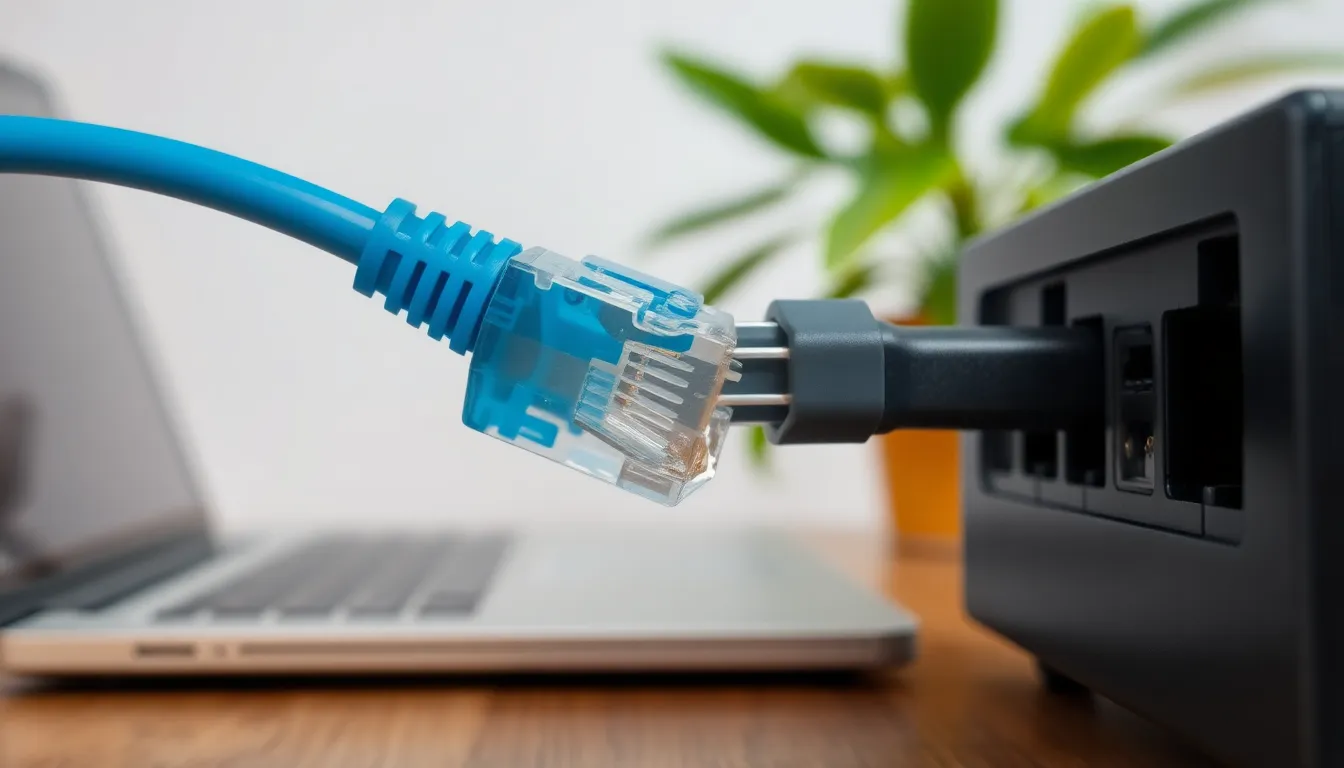
Ethernet connections offer several advantages that enhance user experience, particularly in terms of speed and reliability. These benefits highlight why many prefer Ethernet in various environments.
Speed and Performance
Ethernet connections deliver exceptional speed, supporting data transfer rates up to 1 Gbps. This capability ensures smooth streaming and quick downloads. Latency remains low, which is critical for gamers who require instant responsiveness. High-speed connections enable seamless video conferencing, eliminating disruptions during important meetings. With Ethernet, users enjoy consistent performance that far exceeds typical Wi-Fi speeds.
Reliability and Stability
Using Ethernet guarantees a stable internet connection, minimizing interruptions associated with wireless networks. Cables connect directly, significantly reducing susceptibility to interference from other devices or physical barriers. This stability proves vital for businesses and homes heavily reliant on internet access. High traffic periods don’t diminish performance, allowing devices to maintain effective communication. An Ethernet setup assures users of a dependable online experience, making it the preferred choice for those who value connection integrity.
Types of Ethernet Connections
Ethernet connections come in various forms, each tailored for specific needs and applications. Understanding these types helps users choose the best option for their internet requirements.
Wired Ethernet
Wired Ethernet connections use physical cables to link devices directly to a network or router. This type supports data transfer rates of up to 1 Gbps, providing exceptional speed and reliability. Each connected device gains a stable connection, minimizing interruptions during online activities. Users experience reduced latency, which proves beneficial for gaming and video conferencing. Setup involves simple equipment like Ethernet cables and a compatible router, typically within a household or business environment. Overall, wired Ethernet connections remain a top choice for those prioritizing performance and dependability.
Power over Ethernet (PoE)
Power over Ethernet enables the transmission of both data and electrical power through a single Ethernet cable. This innovation simplifies installations by eliminating the need for separate power sources for devices like IP cameras and VoIP phones. With PoE, users benefit from quicker setups and reduced wiring clutter. Devices receive power and data, enhancing flexibility and mobility in placement. Supporting standards like IEEE 802.3af and 802.3at enhances compatibility across various devices. Enhancements in cabling technology facilitate efficient use of both power and information, making PoE an attractive solution for modern network demands.
Setting Up an Ethernet Connection
Setting up an Ethernet connection requires specific equipment and a straightforward installation process. This ensures optimal performance for internet usage.
Required Equipment
Essential equipment includes a modem, router, and Ethernet cables. Routers distribute the internet signal to connected devices, while modems link to the internet service provider. Ethernet cables, categorized as Cat5e, Cat6, or higher, connect devices directly to the router. Opting for higher category cables results in faster speeds and improved performance. Additional devices may include switches or network extenders for larger setups. Finding the right equipment guarantees a seamless connection experience.
Installation Process
Installation involves a few simple steps. First, connect the modem to the power source and plug in the Ethernet cable from the modem to the router’s WAN port. Next, connect one end of an Ethernet cable to a LAN port on the router, followed by connecting the other end to the device. For additional devices, use more Ethernet cables with the router’s available ports. Once connections are secure, power on the modem and router, ensuring each device initializes properly. Testing the connection afterwards provides confirmation of successful setup.
Troubleshooting Common Issues
Ethernet connections can face several common issues. Identifying these problems ensures consistent network performance.
Loose Connections
Check all Ethernet cable connections. Loose cables can disrupt the data flow. Ensure each end is securely plugged into devices and ports.
Cable Damage
Inspect the Ethernet cables for visible damage. Frayed or broken cables significantly reduce performance. Replacing damaged cables resolves many connectivity issues.
Network Adapter Issues
Examine the network adapter settings on the computer. Outdated drivers may cause interruptions. Updating drivers through the manufacturer’s website often fixes compatibility problems.
IP Address Conflicts
IP address conflicts disrupt network communication. Restarting the router usually resolves these conflicts. Assign static IP addresses to certain devices for a more stable network.
Router Configuration
Check the router settings for proper configuration. Incorrect settings can lead to connectivity problems. Resetting the router to factory defaults sometimes resolves persistent issues.
Interference from Other Devices
Interference from electronic devices can affect network stability. Keep other electronic equipment away from Ethernet cables and routers. This minimizes interference and maintains a stable connection.
Temperature Effects
Excessive heat can impact the performance of network devices. Ensure that the router and modem are in a well-ventilated space. Maintaining an appropriate temperature supports efficient operation.
Network Overload
Too many devices connected to a single router can cause slowdowns. Disconnect unnecessary devices to improve performance. Managing connected devices enhances the overall network speed.
Addressing these common issues leads to a seamless Ethernet experience. Users can quickly restore their connections by following these troubleshooting steps.
Ethernet connections stand out as the go-to solution for anyone seeking reliable and fast internet access. With their ability to deliver superior speeds and lower latency they cater to the needs of gamers streamers and professionals alike. The security benefits further enhance their appeal making Ethernet a wise choice for both home and business environments.
Transitioning to an Ethernet setup is straightforward and cost-effective ensuring users can enjoy a consistent online experience. By investing in a wired connection individuals can eliminate the frustrations of buffering and lag while enjoying peace of mind regarding their data security. Embracing Ethernet is a step towards a more efficient and enjoyable internet experience.


